
5 Most Powerful Aspects to Rank Higher on Google: Essential Strategies for Hospitality Businesses
Getting your hospitality business to show up at the top of Google search results can feel overwhelming. But honestly, it doesn't have to be.
The most powerful aspects to rank higher on Google combine strong technical foundations, quality content that matches what people are searching for, and consistent signals that show search engines your business is trustworthy and relevant.
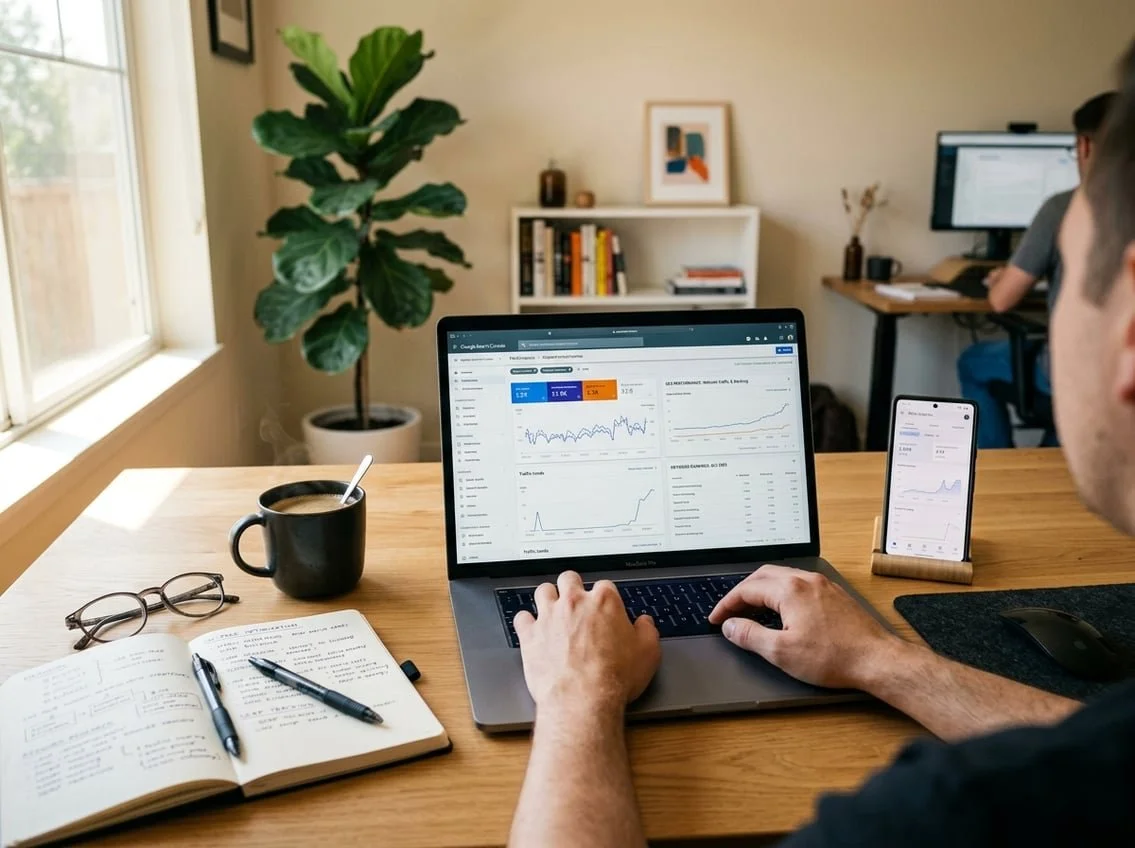
These elements work together to boost your visibility in search results and drive more organic traffic to your website.
Search engine optimisation has changed a lot in recent years. Google now assembles answers from multiple sources instead of just ranking web pages in a list.
Your content needs clear structure so search engines can grab relevant sections for specific searches. You also have to think about how people actually experience your site when they land on it.
You don't need a massive budget or deep technical skills to start improving your Google ranking. The five aspects in this guide focus on practical steps you can take right now.
Each one builds on the others to create a stronger online presence for your hospitality business and help you reach more potential customers through organic search.
Key Takeaways
Focus on creating clear, well-structured content that directly answers what your target audience is searching for
Strengthen your website's technical foundation whilst building quality backlinks and brand mentions across the web
Use analytics to track what's working and continuously refine your SEO strategy based on real performance data
Optimising for Search Intent and User Experience
Google rewards websites that actually understand what searchers want and deliver it with a smooth, fast experience. Matching your content to user intent and maintaining excellent page experience directly impacts your ability to rank higher.
Understanding Search Intent in the Hospitality Industry
Search intent optimisation means aligning your content's format, structure, and depth with what someone actually wants to do. In hospitality, you need to recognise whether visitors are researching destinations, comparing hotel options, or ready to book.
When someone types "best family hotels Brighton," they're looking for lists and comparisons—not just your hotel's homepage. Google prioritises providing the most relevant results to users, so pages that nail user intent end up ranking higher.
Create separate pages for different intent types. Your destination guide page serves informational searches. Your rooms page with pricing targets commercial intent. Your booking page captures transactional searches.
Check what currently ranks for your target keywords. If Google shows listicles, create a list. If it shows in-depth guides, write comprehensive content. The search results basically tell you what user intent you need to match.
Creating a Seamless User Journey
Navigation is where your information architecture becomes real for users. It tells visitors where they are and how to get where they want to go next.
Keep your main menu simple—no more than seven top-level items. For hotels, this usually means Rooms, Dining, Location, Facilities, and Book Now.
Use clear labels instead of creative wording that confuses people. No one wants to guess what "Sanctuaries" means if they're just looking for a room.
Essential navigation elements:
Main menu for primary pages
Footer menu for secondary pages and policies
Breadcrumbs on deeper pages
Internal links within content to related information
User interaction data is one of the three core pillars of search. Every click and scroll feeds back into Google's systems.
When visitors easily find what they need, bounce rate drops and engagement rises. This trains Google's models to trust your site for future queries.
Ensuring Mobile-Friendliness and Responsive Design
Google uses mobile-first indexing, so it primarily looks at the mobile version of your site for ranking. Your mobile experience isn't optional anymore—it's the standard.
Search engines prioritise websites that offer valuable, seamless, and engaging experiences. Page speed and Core Web Vitals measure how quickly your pages load and how stable they are while loading.
Test your site on real mobile devices, not just browser tools. Buttons should be big enough to tap easily. Text should be readable without pinching or zooming. Images need to scale properly without horizontal scrolling.
Mobile optimisation priorities:
Compress images to reduce load times
Ensure tap targets are at least 48 pixels
Use readable font sizes (minimum 16px)
Eliminate pop-ups that cover content
Keep forms short and simple
Slow pages frustrate users and tank your Google rankings. Aim for page speed under three seconds on mobile networks.
Building High-Quality Content for Visibility
Search engines reward content that genuinely helps users find what they need. Your pages need clear keyword targetingcombined with original research, helpful guides, and visual elements that make information easy to understand.
Producing Helpful, Authoritative Content
Your content needs to answer real questions that your audience is asking. Creating high-quality content means offering specific solutions, not just vague generalisations.
Start each piece by addressing the main question directly. Don't make readers scroll through paragraphs of background before getting to the answer they need.
Put your most valuable information right at the top. Write blog posts and guides that draw from firsthand experience.
Search engines can tell when content lacks depth or just repeats what's already out there. Include specific examples, case studies, or data that you've gathered yourself.
Break up dense paragraphs into shorter sections of one to three sentences. This makes your content easier to scan and digest.
Use subheadings to organise information logically so both readers and search engines can understand your content structure. Focus on topics where you have genuine expertise instead of trying to cover everything.
Deep knowledge in a specific area builds more authority than surface-level coverage of many topics. People (and Google) can tell when you really know your stuff.
Incorporating Keywords and Avoiding Keyword Stuffing
Keyword research shows you what terms your audience actually uses. Target keywords should appear naturally throughout your content, especially in your title tag, headings, and opening paragraphs.
Long-tail keywords often work better than broad terms because they match specific search intent. Instead of targeting "email marketing," you might focus on "email automation for small businesses."
Include related terms and concepts that search engines connect with your main topic. If you're writing about email marketing, naturally mention conversion rates, A/B testing, and lead nurturing where it fits.
Never force keywords into sentences where they don't belong. Keyword stuffing makes content awkward and signals poor quality to search engines.
Write for humans first, then double-check that you've included your keywords in logical places. Your headings should actually describe what's in each section, not just repeat keywords.
This helps both users and AI tools understand and extract relevant passages from your content.
Using Visual Elements: Videos, Infographics, and Screenshots
Screenshots show exactly what you're explaining instead of forcing readers to imagine it. Capture real examples from tools, websites, or processes you're describing.
Infographics work well for presenting data, comparisons, or step-by-step processes. They make complex info easier to understand at a glance.
Make sure any text in your infographics is large enough to read easily on mobile devices. Videos can demonstrate processes that are tough to explain with text alone.
Embed them directly in your content where they add value to the topic. Always add descriptive alt text to your images.
This helps search engines understand what the image shows and improves accessibility for readers using screen readers. Don't stuff keywords into alt text—just describe what's in the image.
Visual elements should serve a clear purpose. Skip generic stock photos that don't actually help.
Every image, video, or graphic should help readers better understand your point or provide something useful they can't get from the text alone.
Mastering On-Page and Technical SEO
Optimising your website means paying attention to both what visitors see and the technical stuff behind the scenes. Title tags and meta descriptions help search engines understand your pages, while internal linking guides both users and crawlers through your site.
Technical improvements like page speed can directly impact your rankings and user experience.
Optimising Title Tags, Meta Descriptions, and Headings
Your title tag is one of the most critical on-page SEO elements. Keep it between 50-60 characters to avoid truncation in search results.
Put your primary keyword near the beginning for maximum impact. Meta descriptions don't directly affect rankings but they do influence click-through rates.
Write compelling descriptions under 160 characters and include your target keyword. Google bolds matching terms in search results, which makes your listing stand out.
Meta titles and meta tags work together to communicate your page's topic to search engines. Use unique meta descriptions for each page instead of duplicating them across your site.
Structure your content with proper heading hierarchy. Use H1 tags for main titles, H2s for major sections, and H3s for subsections.
This improves readability and helps search engines understand your content structure. Never skip heading levels or use multiple H1 tags on a single page.
Improving Internal Linking and Site Structure
Internal links connect your pages and help distribute authority across your site. When you link to related content, use descriptive anchor text so readers and search engines know what to expect on the destination page.
Create a site structure that actually makes sense—clear categories, logical subcategories. Try to keep your most important pages within three clicks from the homepage.
Use a table of contents with jump links for longer articles so people can get around more easily. That little navigation boost can make a difference.
Build topical clusters by linking related pages together. This helps establish your expertise on specific subjects and gives search engines a clearer picture of how your content fits together.
Link from newer posts to established authority pages to pass link equity. Don't let those older, valuable pages sit isolated.
Include breadcrumb navigation so users always know where they are in your site hierarchy. Breadcrumbs improve user experience and open up more internal linking options.
Regularly audit your internal links to fix broken connections. Keep an eye out for orphaned pages that don't have any incoming links—they're easy to miss.
Enhancing Page Speed and Core Web Vitals
Page speed matters, both for rankings and for keeping people on your site. Use PageSpeed Insights to see how your site performs and what might be slowing it down.
Core Web Vitals focus on user experience with three main metrics. Largest Contentful Paint (LCP) measures loading speed and should happen within 2.5 seconds. Cumulative Layout Shift (CLS) tracks visual stability—aim for a score below 0.1.
Interaction to Next Paint (INP) replaced First Input Delay (FID) to measure responsiveness. Keep an eye on all three metrics if you want to stay competitive.
Convert images to WebP format to shrink file sizes without killing quality. Enable browser caching so returning visitors aren't waiting around for pages to load.
If you haven't switched to HTTPS yet, just do it—it's a ranking factor and people trust it more. Implement responsive design so your site looks good everywhere, not just on desktop.
Use structured data to help search engines understand your content. Trim code bloat, and get rid of render-blocking resources that slow down page rendering. It's not glamorous work, but it pays off.
Strengthening Authority with Quality Backlinks and Brand Mentions
Building authority isn't just about technical tweaks—it's about earning links from trusted sources, keeping a diverse set of quality connections, and building your brand's reputation through mentions and reviews. These off-page SEO elements show Google that real people and credible sites vouch for you.
Earning Trust with Authoritative Backlinks
Not all backlinks are equal in Google's eyes. High-quality backlinks from reputable websites act like endorsements, signaling that your content deserves trust.
Focus on getting links from sites that actually have organic traffic—think 1,000+ monthly visitors. Look for editorial standards, named authors, and real engagement like shares or comments.
Key characteristics of authoritative backlinks:
Published within main article content, not buried in footers or sidebars
Come from pages relevant to your niche
Originate from sites with solid reputations and fact-checking
Appear in a context that makes sense for readers, not just for SEO
A single editorial link from a respected publication can outperform dozens of directory submissions or low-quality guest posts. Google's E-E-A-T guidelines reward honest, trusted sources and punish manipulative link schemes.
Diversifying Your Backlink Profile
A strong backlink profile mixes links from different types of authoritative sources. Don't just stick to one tactic—diversity looks natural to search engines.
Try for a blend: industry publications for relevance, universities for academic clout, news outlets for timely authority. Each type boosts your site's trust in a different way.
Watch your DA score, but don't obsess over it. Some sites have high domain authority and zero real traffic—real authority comes from sites people actually read and reference.
Effective link building approaches:
Guest posts on niche sites your audience already follows
Broken link building—find outdated resources and offer replacements
Digital PR campaigns with original research or data
Creating tools, templates, or calculators that naturally earn mentions
Reclaiming unlinked brand mentions is a quick win. Find sites already talking about you and just ask them to add a link—sometimes that's all it takes.
Gaining Brand Mentions and Positive Reviews
Brand mentions—even without links—still build authority by spreading your name across the web. Google notices when people talk about your brand, even if they don't link to you.
Positive reviews on industry platforms, Google Business Profile, and third-party sites strengthen your trust signals. They provide social proof that real customers value what you do.
Set up Google Alerts or use monitoring tools to track brand mentions. Respond to reviews—good or bad—to show you're active and trustworthy.
Quality backlinks combined with consistent brand mentions create a strong [authority profile](https://www.oypwebsites.com/news/Blog Post Title One-3zaa9-zlxng-tna4r). They position your site as a recognized leader and send trust signals Google pays attention to.
Request reviews from happy customers by following up with a simple email. Make it easy—provide direct links to review platforms. Show off testimonials on your site to encourage others to leave feedback too.
Leveraging Data, Analytics, and Continuous Improvement
Ranking higher on Google isn't a one-and-done thing. You need to track what's working, see how users interact with your content, and tweak your approach based on real data.
Monitoring Performance with Google Analytics and Search Console
Google Search Console gives you a peek into how Google sees your site. Check which queries bring visitors, monitor keyword rankings, and spot technical issues that might be holding you back.
The platform shows which pages appear in SERP results and how often people click. If your click-through rate is low, maybe your titles or meta descriptions need a rewrite.
Google Analytics shows what happens after visitors land. Track user engagement metrics like time on page, bounce rate, and pages per session to see what keeps people interested—or what sends them away.
Look for patterns in user behavior. If people leave quickly from certain pages, maybe your content doesn't match their search intent. If they stick around and explore, you're probably on the right track.
Analysing User Engagement and Adjusting Strategy
User engagement impacts your rankings because Google wants to show content that actually satisfies searchers. Low engagement tells Google your page might not deserve its spot.
Track which pages win featured snippets and study what made Google pick them. These top SERP spots usually go to content that answers questions quickly and clearly.
Keep an eye on how AI Overviews affect your traffic. Google's AI search sometimes answers questions right in the results, so you might need to adjust your content marketing to offer depth that AI summaries can't provide.
Let your SEO strategy evolve with the data. If certain topics drive engagement, double down on those. If local searchbrings in quality traffic, invest more in local SEO.
Building E-E-A-T (Experience, Expertise, Authority, and Trust) takes time and proof—focus on content quality and user satisfaction.
Staying Ahead with SEO Tools and Best Practices
Modern SEO tools help you catch opportunities and issues before they become problems. Use SEO tools for rank tracking across locations and devices, and try backlink analysis to see who's linking to your competitors but not to you.
Leverage data analytics for continuous improvement initiatives by reviewing performance regularly. Set up monthly reviews of your key metrics and look for trends instead of reacting to every daily blip.
Test changes and give them time to work. If you tweak your content strategy, be patient—SEO results usually take weeks or even months to show up.
Stay on top of SEO best practices as Google updates its algorithms. What worked last year might flop today. Follow Google's official advice, and experiment on less important pages before rolling out big changes everywhere.
Frequently Asked Questions
Google's ranking system keeps changing, especially with new features like AI Overviews and passage-level indexing. Here are answers to some of the most common questions about improving visibility across traditional search results and AI-powered features.
What are the most important Google ranking factors to prioritise in 2026?
The title tag is still one of the strongest signals Google checks when ranking pages. Use your target keyword naturally in your title, but make it enticing enough for users to click.
Content satisfaction signals are becoming even more important. Google tracks whether users bounce back to search results after visiting your page—if they do, it means your content missed the mark.
Mobile optimization and page speed matter a lot. Slow-loading pages or poor mobile layouts push users back to search results, which sends negative signals about your content quality.
High-quality backlinks and smart internal linking build your site's authority. Unlinked brand mentions now influence which sources AI tools cite or summarize, so don't ignore them.
How can I improve my website's on-page SEO to increase organic visibility?
Start by weaving keywords naturally into your content, headings, and title tags. On-page SEO covers things like content quality, meta tags, URL structure, and internal linking—all stuff you can control.
Use clear, descriptive headings that actually match the content underneath. Skip generic headings like "Here's Why This Matters"—go for specifics, like "Why SEO Matters for Small Businesses."
Lead with your answer at the top of each page. Don't bury the important stuff under long intros; put your main point or solution right up front.
Break your content into short paragraphs—one to three sentences tops. It makes everything easier to scan and helps readers find what they need faster.
What role do high-quality backlinks play in improving search rankings today?
Backlinks are still a key ranking factor in Google's algorithm. They show that other sites trust your content enough to reference it.
Focus on building a natural backlink profile, not just chasing numbers. A handful of links from authoritative, relevant sites beats a pile from low-quality sources any day.
Authority isn't just about links anymore, though. Repeated brand mentions—even without direct links—influence which sources language models cite or summarize in AI-generated answers.
How do page speed and Core Web Vitals affect a site's performance in Google Search?
Page speed is a confirmed ranking factor. If your site loads faster than a competitor’s, you might outrank them—assuming everything else is pretty much equal.
Google’s free PageSpeed Insights tool lets you check your site’s current performance. It’ll call out specific spots where your loading times could use a little help.
Slow pages frustrate people. When users bail and head back to the search results, Google notices that your content didn’t quite hit the mark.
Fast, mobile-friendly pages just feel better to use, and honestly, they make you look more trustworthy. That ties right into the satisfaction signals Google keeps an eye on.
How can I create content that matches search intent and earns higher positions?
Google doesn’t just look at whole pages anymore—it analyzes intent at the passage level. So, different sections of your content can match up with different search queries, which is actually pretty interesting (here’s a bit more on that).
Kick off each section with your key points. Then, fill in the details and context after, so even skimmers get the answers fast.
Headings matter. Use logical ones that help both readers and search engines find their way—think of them as little signposts for each topic.
It helps to weave in related concepts and entities that naturally fit your subject. Writing about email marketing? Don’t forget conversion rates, A/B testing, automation tools, and lead nurturing.
Visuals aren’t just for show. Drop in screenshots that actually demonstrate what you mean, charts that make your point clear, or maybe a before-and-after if it fits.
What technical SEO issues most commonly prevent pages from ranking well?
A confusing site structure can make it tough for search engines to crawl and actually understand your content. If your pages aren’t logically organized or easily accessible, you’re basically asking Google to get lost.
If your pages aren’t crawlable—or indexable—they’re just not going to show up in search results. Double-check your robots.txt file and meta tags to make sure you’re not accidentally blocking important stuff from Google’s crawlers.
Broken internal links? They create dead ends for both users and search engines. It’s a pain to keep up, but regularly auditing your site for broken links is worth the time.
Use anchor text that actually tells people (and bots) what to expect when linking between pages. Don’t just say “click here” everywhere; it helps no one.
Poor mobile optimization messes with your rankings in all sorts of ways. Your site needs to display properly—and load fast—on mobile devices, especially since that’s where most searches happen these days.
Missing or poorly optimized title tags and meta descriptions can tank your click-through rates from search results. Every page should have unique, descriptive metadata with the right keywords, even if it’s a bit of a grind to set up.
